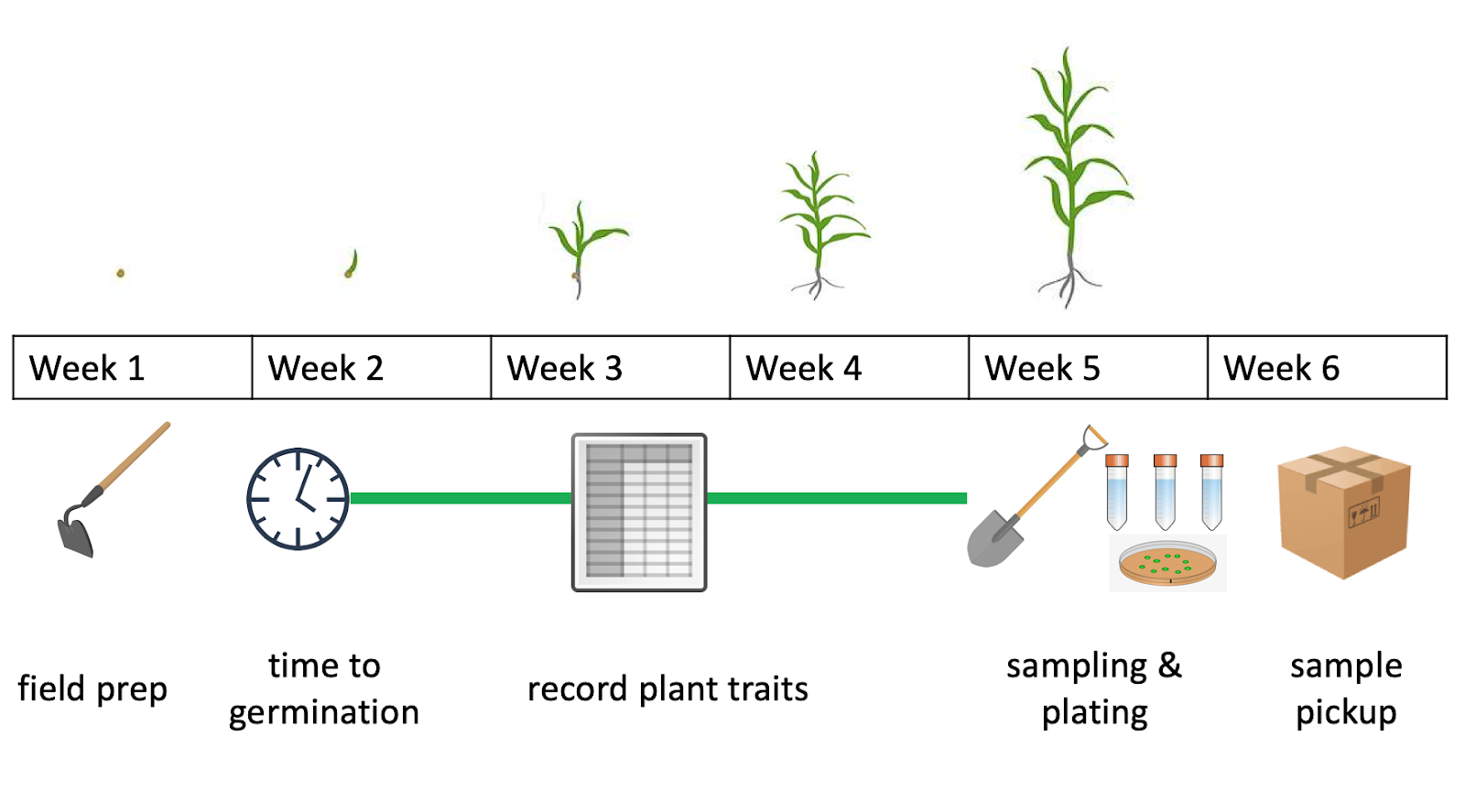
Field prep & planting
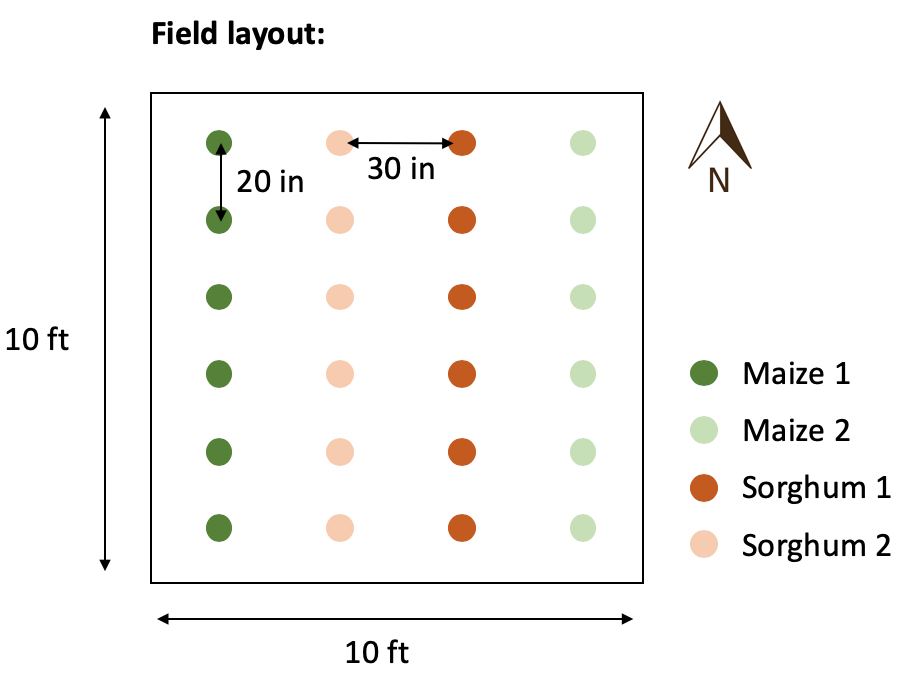
In each location, participants will designate and measure a 10x10 foot plot in a backyard, field or other suitable location. Vegetation and debris will be removed from each plot, the plot will be tilled and one row of 6 plants for each cultivar will be sowed (see Fig. 3). A ~1 lb bulk soil sample is collected from the center of the 10x10 ft plot and stored in a household freezer. The bulk soil sample will serve to assess the chemical composition of the soil as well as the background microbiome from which the plants in each location are expected to recruit root microbes.
Measure time to germination
During the first week, the plot is checked daily for emerging seedlings. The date of emergence will be recorded for each plant.
Record plant traits
Starting upon emergence, morphological traits of each plant are recorded 2x per week. Traits to measure include plant height, number of leaves and base stem circumference. For each time point a photo of the plot will be taken and submitted to the university mentors.
Root soil sampling
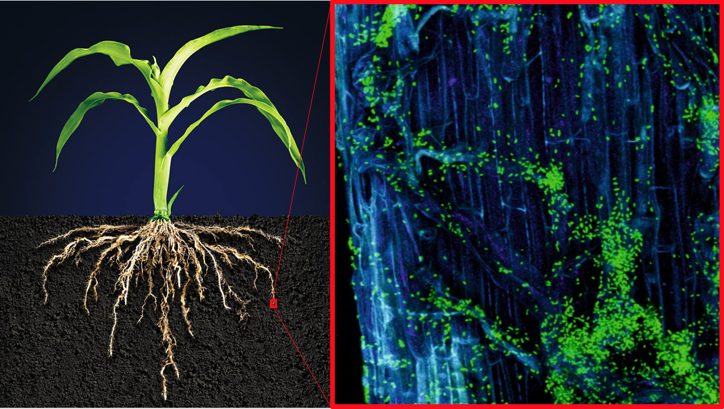
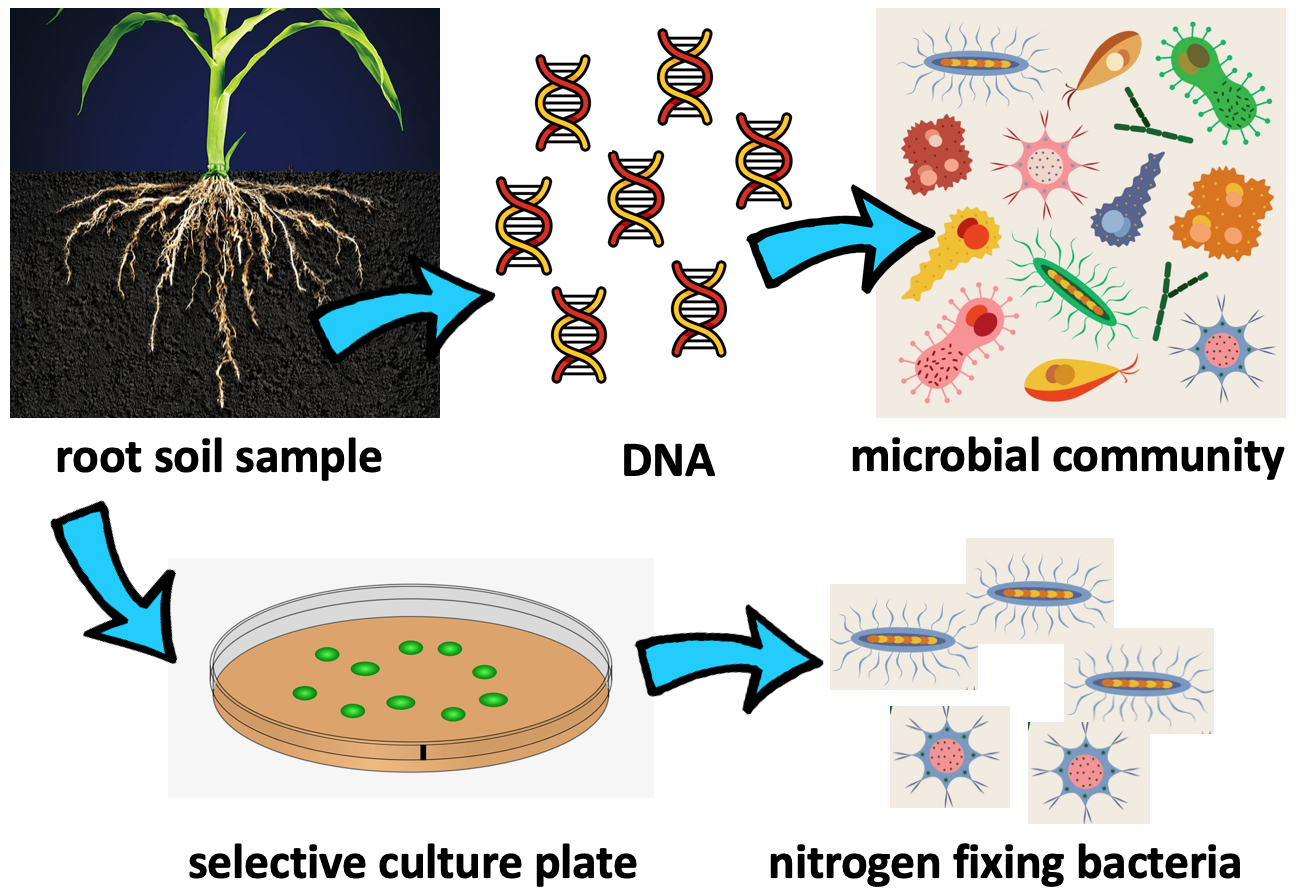
3 plants per cultivar will be cut and roots dug up with a shovel. Loose soil is shaken off to expose roots with tightly adherent soil (called “rhizosphere”). We are interested in this soil as it is home to a great number of microbes. Root pieces with adherent soil are collected in a 50 ml sample tube, sample buffer is added and rhizosphere soil is shaken off the roots. The rhizosphere suspension is filtered and stored in a fresh freezer tube. Before freezing, a small sample of the soil suspension pipetted off to be analyzed for nitrogen fixing bacteria.
Isolation of nitrogen fixing microbes
For each of the 4 plant cultivars, the 3 replicates will be mixed and processed in 2 ways:
1 ml rhizosphere soil suspension will be transferred into a screw cap tube, mixed with glycerol solution, and frozen for later analysis at UNL (glycerol keeps microbes alive during freezing). A second 1 ml rhizosphere soil suspension will be diluted and serial dilutions will be plated out on nitrogen deficient media and growth of microorganisms will be monitored (guess which kind of microbes will survive on that media).
Sample pickup and data analysis at UNL
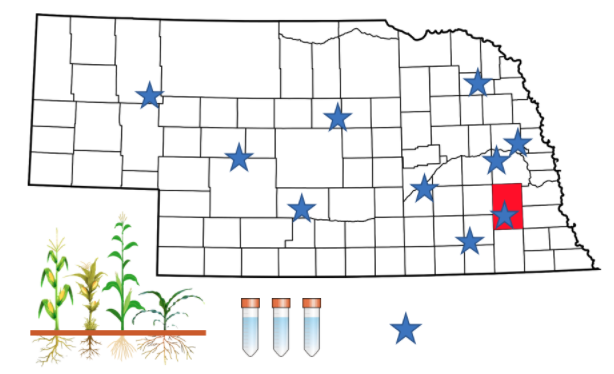
From each of 10 locations, 1 bulk soil sample, 12 rhizosphere soil samples and 4 glycerol stocks will be collected by UNL teams. This will also be a chance for a meet & greet with the scientists! Once all samples are collected, DNA will be isolated from 120 rhizosphere and 10 bulk soil samples for Illumina 16S rDNA sequencing. This is expected to take several weeks. Sequencing data will be analyzed by UNL researchers. 16S reads will be quality filtered, reads will be annotated to microbial taxa and microbiomes will be summarized for all samples at the level of microbial genera. A final table of sequence counts for all detected microbial genera (rows) in all 130 samples (columns) will be able to answer the question stated in the hypothesis.